Diverse Types of Aluminum Composite Panels
I. Classification by Shape
Flat Panels
This is the most fundamental type of aluminum composite panel. It has a flat surface and a regular shape, usually rectangular. Flat aluminum composite panels are easy to install and are widely used for exterior walls of buildings, indoor walls, and ceilings. For example, in the interior ceiling decoration of some large shopping malls, flat aluminum composite panels can be spliced together to form a simple and elegant style, and their flat surfaces are convenient for cleaning and maintenance.
Shaped Panels
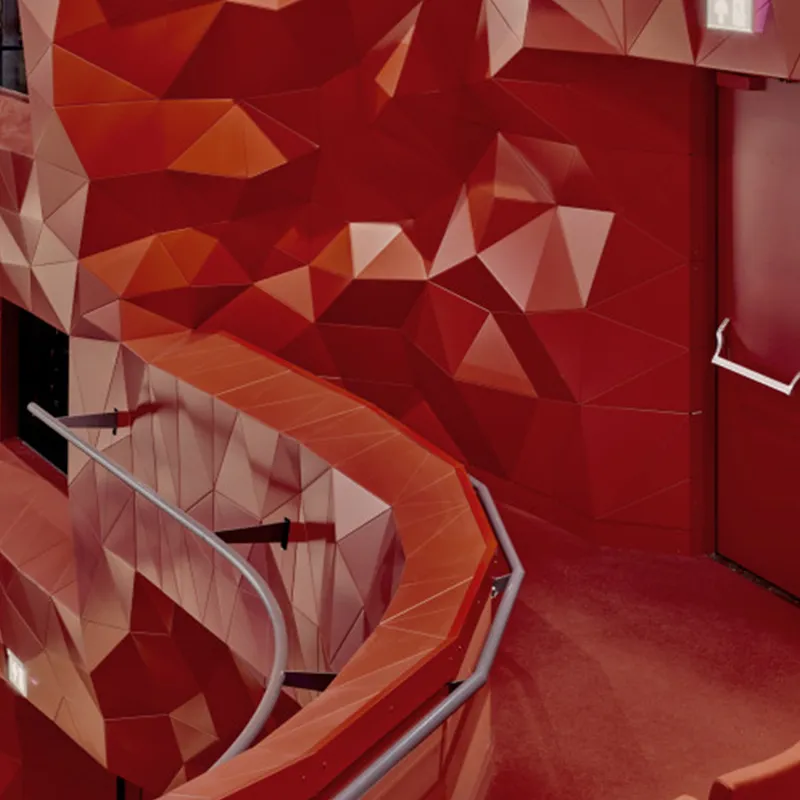
Shaped aluminum composite panels refer to those with irregular shapes, which are made through complex processing techniques. They can be curved, wavy, or have various unique geometric shapes. These shapes are designed to meet specific architectural design requirements. For example, in the exterior facades of some modern - art - inspired buildings, shaped aluminum composite panels are used to create smooth curves or unique shapes. Just like the exterior design of some cultural and art centers, shaped aluminum composite panels can make the building look more dynamic and creative.
Double - Curved Panels
Double - curved aluminum composite panels are a more complex type, which are curved in two directions. This kind of aluminum composite panel requires high - level processing techniques and advanced equipment and technologies. Double - curved aluminum composite panels are usually used to create highly - styled architectural parts. For example, in the lobby dome of some high - end hotels or the iconic shaped parts of large - scale stadiums, they can present a very smooth and dynamic visual effect.
II. Classification by Surface Treatment Method
Fluorocarbon - Sprayed Aluminum Composite Panels
Fluorocarbon paint is a high - performance coating. Fluorocarbon - sprayed aluminum composite panels have excellent weather resistance, corrosion resistance, and anti - pollution properties. They can maintain good color and performance in outdoor environments for a long time, and the general warranty period can reach 15 - 20 years. This kind of aluminum composite panel is often used for the exterior wall decoration of high - rise buildings. Even in harsh climatic conditions such as acid rain and sandy winds, it can effectively prevent the damage and fading of the aluminum panel surface.
Powder - Sprayed Aluminum Composite Panels
Powder spraying is to electrostatically adsorb powder coatings on the surface of the aluminum panel and then form a coating through high - temperature curing. Its coating is relatively uniform, has a rich color, and has good decorative properties. Compared with fluorocarbon - sprayed panels, powder - sprayed aluminum composite panels have a relatively lower cost and are more widely used in some indoor decorations with less demanding weather resistance requirements or general building exterior wall decorations, such as the indoor partitions of ordinary office buildings.
Anodized Aluminum Composite Panels
Anodizing is an electrochemical oxidation process. Through this treatment, a dense oxide film is formed on the surface of the aluminum composite panel. This oxide film has good hardness and wear resistance and can be dyed into various colors as needed. Anodized aluminum composite panels have a strong metallic texture and are often used in some decoration occasions that pursue a natural metallic effect or require a high - hardness surface, such as the interior decoration of industrial - style spaces or the outer shells of electronic products.
Porcelain - Fused - to - Aluminum (PFA) Composite Panels
After porcelain - fused treatment, the aluminum composite panel surface has a texture similar to ceramics, with high gloss and vivid colors. Its chemical corrosion resistance and wear resistance are also excellent, and it is not easy to fade. PFA composite panels are used in some places that require high decorative effects and good durability, such as the interior decoration of high - grade restaurants or the exterior facades of luxury brand stores.
III. Classification by Use
Exterior Wall Aluminum Composite Panels
They are mainly used for the exterior facade decoration of buildings. They need to have good weather resistance and wind - pressure resistance. The thickness of exterior wall aluminum composite panels is generally between 2.5 - 4mm, and functions such as waterproofing and heat insulation also need to be considered. For example, the aluminum composite panels used on the exterior walls of buildings near the sea need to be able to resist the erosion of sea breeze and the corrosion of salt spray.
Indoor Aluminum Composite Panels
They are used for the decoration of indoor walls, ceilings, etc. Indoor aluminum composite panels focus more on decorative and environmental - friendly properties. Their surface treatment can be more diversified, such as adopting various wood - grain and stone - grain decorative effects. At the same time, certain requirements are also imposed on environmental protection indicators such as indoor air quality. Generally, coatings and materials that meet indoor environmental protection standards will be selected for production.
Curtain Wall Aluminum Composite Panels
Curtain wall aluminum composite panels are an important part of the building curtain wall system. Besides the decorative function, the overall structural performance of the curtain wall such as sound insulation, heat insulation, and air - tightness also needs to be considered. The installation method of curtain wall aluminum composite panels is also quite special and needs to cooperate closely with the curtain wall keel system to ensure the stability and safety of the curtain wall. For example, in some large - scale glass - curtain - wall buildings, the aluminum - panel curtain wall may serve as the non - transparent part and be combined with the glass - curtain - wall to play a role of shielding and decoration.


