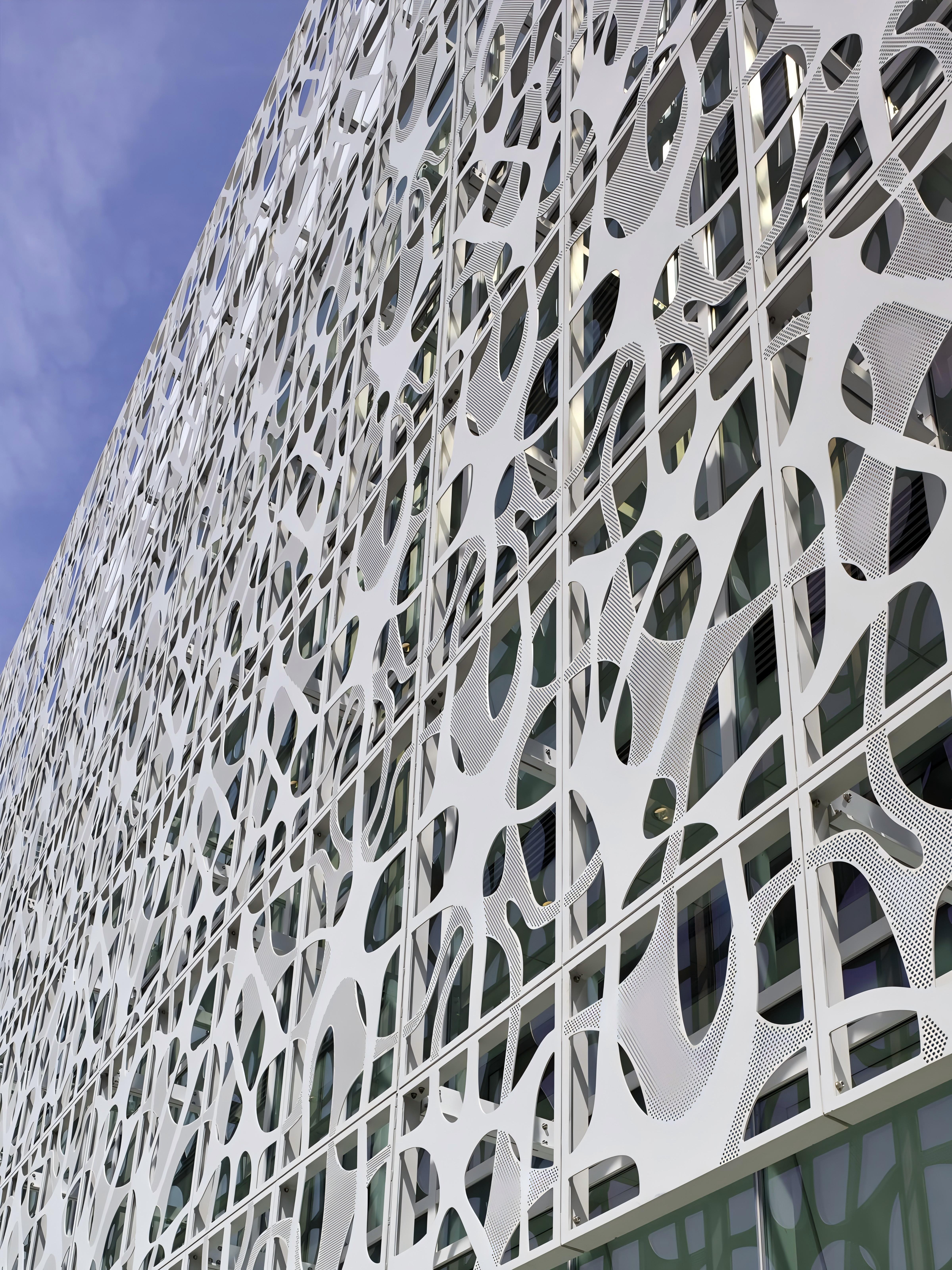
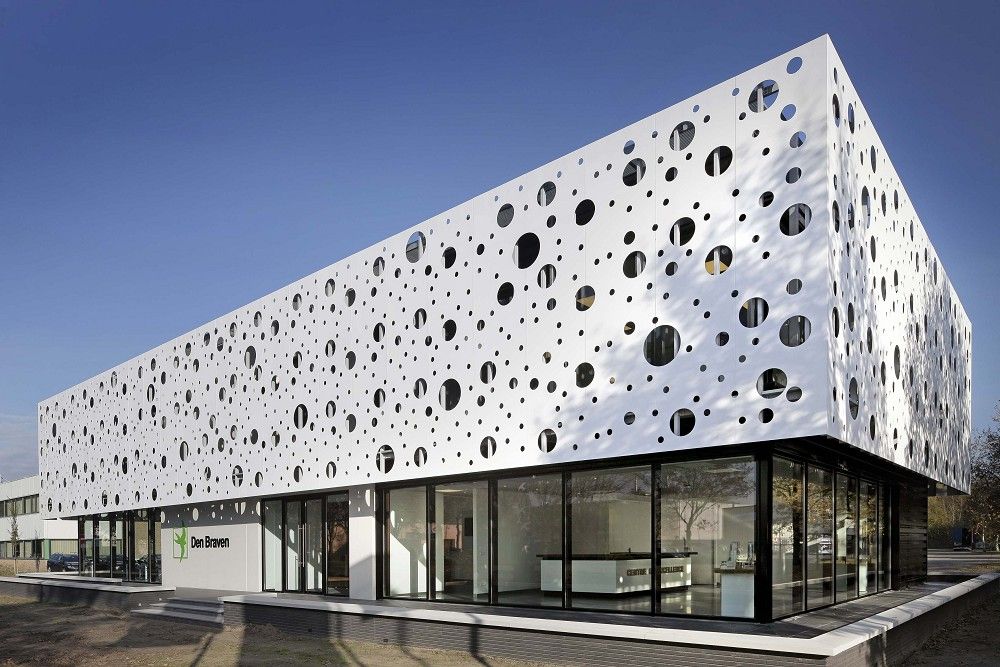
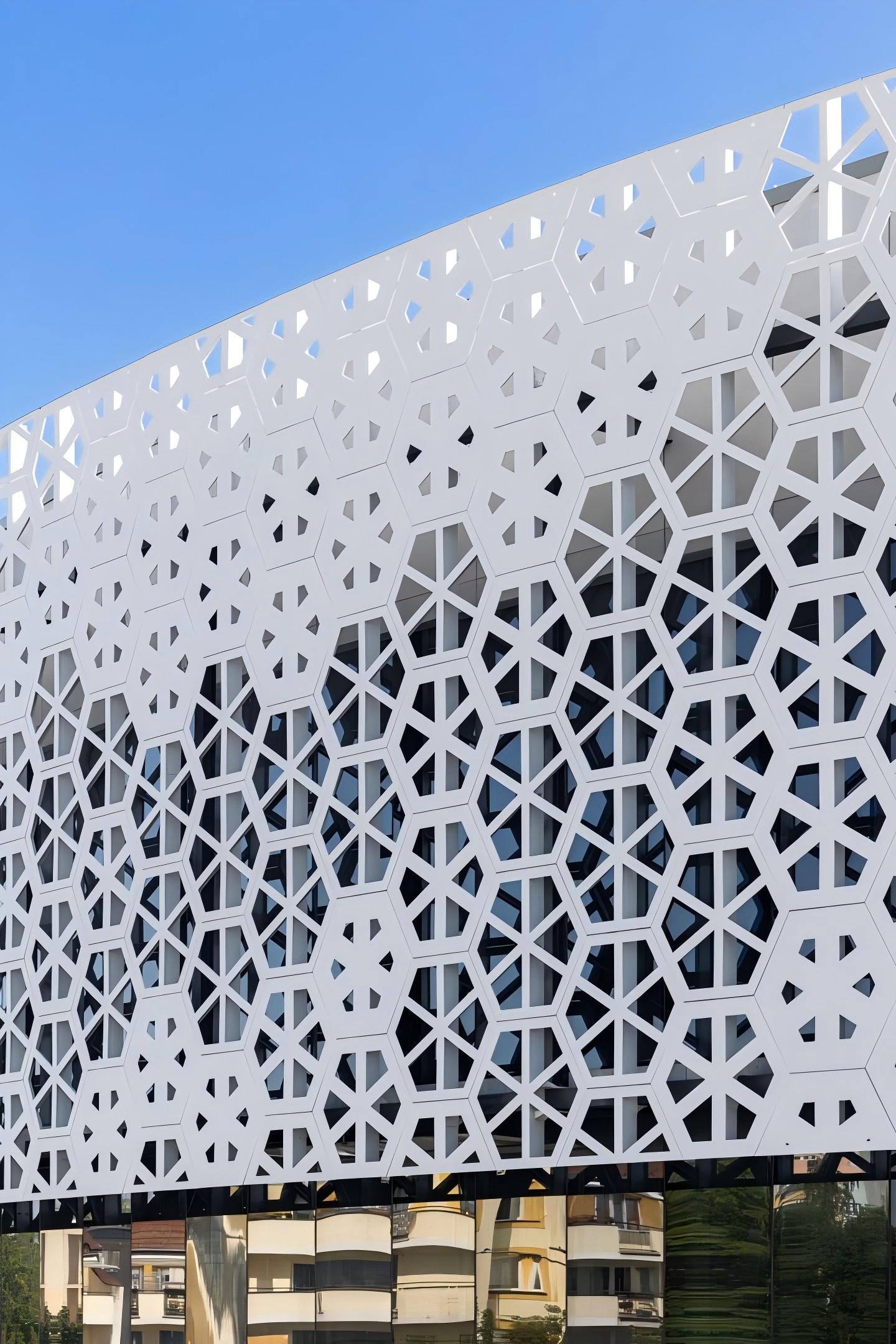
In the field of modern architectural decoration, carved aluminum composite panels stand out with their unique artistic charm and excellent performance, becoming the preferred material for many high-end architectural projects. They not only add rich visual layers and cultural connotations to the building facades but also perform outstandingly in terms of functionality and durability, demonstrating the perfect integration of architecture and art.
The manufacturing process of carved aluminum composite panels is truly exquisite. Through advanced CNC carving technology, various complex and exquisite patterns, textures, and shapes can be accurately carved on the surface of the aluminum composite panels. Whether it is delicate floral patterns, magnificent geometric lines, or traditional totems with cultural symbolic meanings, they can all be vividly presented on the aluminum plates under the careful design of the carvers and the precise operation of the CNC equipment. This digital carving process ensures that every detail is clear and sharp, and the repetition accuracy of the patterns is extremely high, providing a strong guarantee for the large-scale production of high-quality carved aluminum composite panels.
During the carving process, the carving depth and tool path can be flexibly adjusted according to the design requirements, thus creating a rich variety of three-dimensional effects. For example, the shallow carving process can create a hazy beauty that seems to be hidden and revealed, while the deep carving can make the patterns more prominent and eye-catching, with a strong tactile and visual impact. In addition, combined with different surface treatment methods, such as anodizing, powder coating, and fluorocarbon paint spraying, the color and texture of the carved aluminum composite panels can be further enriched, making them show unique luster and charm under different lighting conditions.
As the base material for carving, aluminum composite panels themselves have many excellent characteristics. Firstly, aluminum is a lightweight metal, and its density is only about one-third that of steel. This makes the carved aluminum composite panels significantly reduce the load on the building structure during the installation process, especially suitable for high-rise buildings or projects with strict requirements on structural loads. Meanwhile, aluminum has good plasticity and ductility, and it is easy to be processed into various shapes and sizes of plates, which can meet the diverse needs of different architectural designs.
In terms of weather resistance, aluminum composite panels perform excellently. After special surface treatment, they can effectively resist the erosion of natural environmental factors such as ultraviolet rays, acid rain, and wind-blown sand, maintaining bright colors, flat surfaces for a long time, and are not prone to fading, deformation, or rusting. This excellent durability ensures that the carved aluminum composite panels can withstand the test of time in the field of building exterior wall decoration, providing a lasting and stable decorative effect for the building. In addition, aluminum composite panels also have good fire resistance, sound insulation and heat insulation properties, as well as being environmentally friendly and recyclable, meeting the requirements of modern buildings for material safety, energy conservation, and sustainable development.
The application scenarios of carved aluminum composite panels in architecture are extremely extensive. In the field of commercial buildings, such as shopping centers, hotels, and office buildings, their exquisite carved patterns can become the iconic elements of the buildings, attracting the attention of customers and visitors and enhancing the overall image and commercial value of the buildings. For example, the lobby of a hotel adopts aluminum composite panels carved with gorgeous European-style patterns as the background wall decoration, which can create a luxurious and elegant atmosphere; while the exterior facade of a shopping center uses aluminum composite panels with modern and simple style carved patterns, which can show a fashionable and dynamic commercial atmosphere.
In the field of cultural buildings, such as museums, theaters, and libraries, carved aluminum composite panels play a unique role. They can integrate historical and cultural elements, images of artistic works, etc. into the architectural decoration through the carving process, making the building an important carrier for cultural inheritance and display. For example, the exterior wall of a museum adopts aluminum composite panels carved with ancient cultural relic patterns or historical scenes, which can make people feel the strong cultural heritage even before entering the museum; the interior of the auditorium of a theater uses aluminum composite panels carved with musical symbols or drama mask patterns for decoration, which can enhance the artistic atmosphere and improve the viewing experience of the audience.
In addition, carved aluminum composite panels are also widely used in some public building facilities, such as subway stations, airport terminals, and sports stadiums. They not only beautify the building environment but also can provide convenient information guidance and a comfortable space feeling for people by designing carved patterns with guiding or functional properties. For example, the walls of the passageways in a subway station adopt aluminum composite panels carved with subway line maps and station information, which are both beautiful and practical; the ceilings or facades of sports stadiums are decorated with aluminum composite panels carved with sports element patterns, which can fully show the vitality and passion of sports buildings.
With the continuous updating of architectural design concepts and the continuous progress of science and technology, the design innovation of carved aluminum composite panels also shows a diversified development trend. On the one hand, the application of digital design technology is becoming more and more widespread. Designers can use computer-aided design software (CAD), three-dimensional modeling software (3DMAX), etc. to carry out more free and flexible creative designs, realizing the perfect integration of carved patterns and the overall shape of the building. Meanwhile, the introduction of parametric design methods enables the pattern design of carved aluminum composite panels to be dynamically adjusted and optimized according to factors such as the building environment, lighting conditions, and user requirements, creating a unique and personalized architectural decoration effect.
On the other hand, the innovative integration of materials and processes also paves a new path for the development of carved aluminum composite panels. For example, combining new luminescent materials with carved aluminum composite panels to develop carved aluminum composite panel products with a luminous effect at night, adding colorful elements to the urban night scene; or applying nano self-cleaning coating technology on the surface of carved aluminum composite panels to make them have self-cleaning, anti-fouling, and antibacterial functions, reducing the building maintenance cost and improving the convenience and environmental friendliness of the use of materials. In addition, interdisciplinary design cooperation is gradually becoming a trend. Architectural designers, carving artists, material engineers, and other professionals from different fields jointly participate in the design and research and development of carved aluminum composite panels, organically combining artistic creativity, architectural functions, and material technologies, and promoting the development of carved aluminum composite panels in the direction of a higher level of artistry and intelligence.
In conclusion, carved aluminum composite panels, as a building decoration material that combines artistic value, practical functions, and material advantages, are playing an increasingly important role in the modern architectural field. They provide rich creative inspiration and infinite possibilities for architectural designers with their unique artistic beauty of the carving process, excellent material performance, and extensive application scenarios. It is believed that in the future development process of architecture, carved aluminum composite panels will continue to inherit and innovate, constantly writing wonderful chapters of the perfect fusion of architectural art and craftsmanship.